
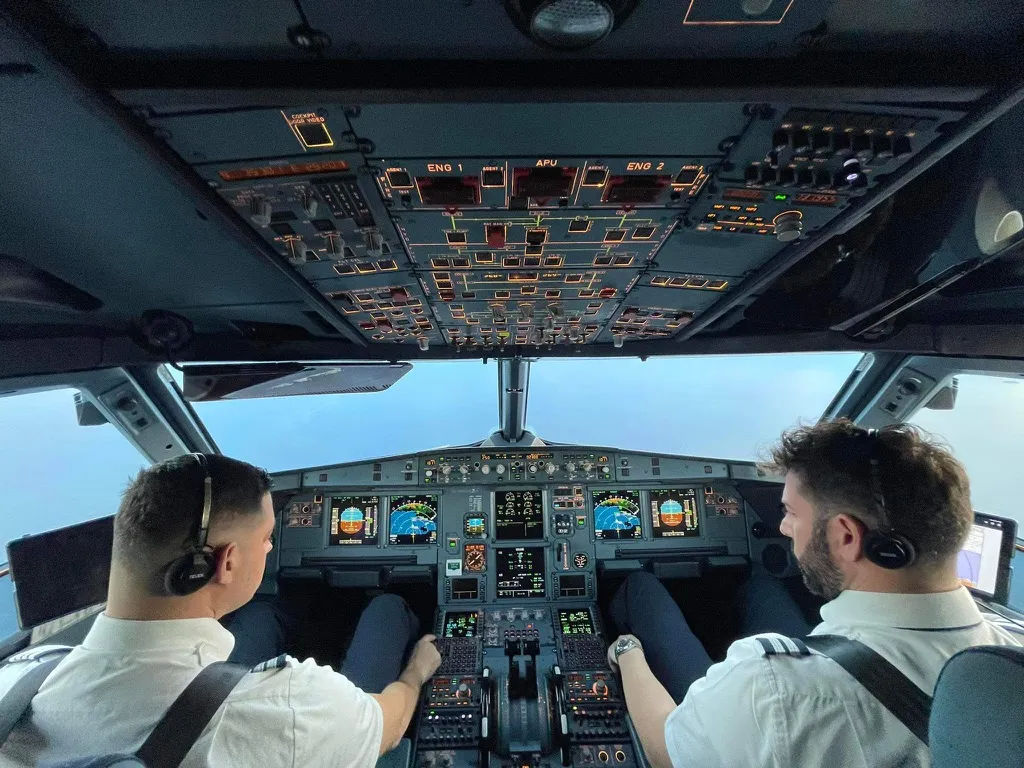
For flight schools and ATOs
CBTA from the first lesson. With a logbook your graduates take to the airline.
Part-FCL lessons graded with competency marks, students and aircraft managed in one system, and a sponsor portal for airline partners, on the same platform as aeroEBT. Students leave with their digital logbook, which belongs to them.
Why it matters here
Judged on its graduates. An ATO is measured by what they can do at the airline.
Airlines ask for evidence
A certificate says a course was completed. Airline partners increasingly want to see how competency developed.
Your authority is moving too
Competency-based assessment and Area 100 KSA are the direction of travel for Part-FCL training, not an airline-only concern.
Instructors vary here as well
Two instructors, one student, two different judgements: the same problem airlines measure, at an earlier stage.
From the first lesson
Progress you can show. Not just hours you can count.
Each lesson is graded with competency marks alongside the pass, marginal or fail, so a student's record shows the trajectory: where they are strong, where they need another detail, and what the next lesson should target. Lesson records carry those marks today; mapping them to the nine ICAO competencies and Area 100 KSA is on the roadmap.
- Part-FCL syllabus phases with stage gates, exams and skill tests
- Competency marks on each lesson, not only pass or fail
- Sponsor portal: airline partners follow their cadets during training
- Logbook hours and pilot account that continue into MPL, type rating and the airline
- On the roadmap: lesson grades mapped to the nine ICAO competencies and Area 100 KSA
The student keeps the logbook
They leave with their logbook. The hours belong to the pilot, not the school.
When a student finishes with you, their digital logbook goes with them, so there is no transcript to assemble. It is a real difference at open days, and it costs you nothing but a decision.
- Digital logbook filled from each closed flight
- Hours move with the pilot and can be exported at any time
- The school keeps its record for the retention period its approval requires
- The same structure the airline reads on day one, so nothing is re-keyed
From the school to the line
The system they meet again. At the airline, with the same account and logbook.
Most cadets learn one system at the school and a different one at the airline. Where the airline runs aeroEBT, your graduate does not start again. Where it does not, the logbook can still be exported.
Same platform
The school and an airline that runs aeroEBT work on one pilot account, so the graduate arrives already known to the system.
One logbook, no re-entry
Hours logged at the school continue at the airline without being typed in again.
Straight into MPL or type rating
The pilot account and logbook continue through MPL, type rating and line training without a break.
Your school keeps its own data
Sharing with an airline is explicit, per cadet, and under your control.
Running the school
The rest of the day job. Aircraft, simulators, instructors and invoices in the same system.
Scheduling
Students, instructors, aircraft and FNPT devices booked in one place.
Learn moreYour simulator
SEP IR, MEP IR and MCC FNPT II devices, built and supported by us.
Learn moreLease the device from a 39% deposit
Put down 39%, 50% or 70% and pay the balance month by month. Remote FSTD maintenance is included in every scheme.
Learn moreRecords for your authority
Training records, licences and expiries, signed and with every amendment traced.
Learn more
Airline partnerships
Why an airline picks an ATO. Evidence, a logbook that transfers and devices that can credit the lesson.
Evidence instead of assurance
Show progress during the course through the sponsor portal, not a transcript at the end of it.
A logbook that transfers
A pilot account and logbook that continue into the airline's own programme rather than stopping at your door.
Standardised instructors
Measured consistency across your instructor team is a selling point, not an internal matter.
Devices that can credit the lesson
Under the new FSTD rules, what your device can credit becomes an explicit question. Know the answer first.
MPL readiness
If an airline partner wants an MPL programme, the programme design and the FNPT II devices come from one place.
Capacity you can prove
Utilisation and throughput data when an airline asks how many cadets you can take.
Your path
Four steps. From the first lesson to the airline handover.
Run the school in FSMS
Courses, scheduling, fleet, maintenance and financials in one system, with CBTA competency marks on every lesson.
Learn moreGrade every lesson
Competency marks, stage gates, exams and skill tests on the same platform as aeroEBT.
Learn moreTrain on FNPT II
SEP IR, MEP IR and MCC devices, scheduled and logged with the lesson.
Learn moreHand cadets to airlines
Sponsor portal during training, logbook and account carried to the airline.
Learn more
Questions flight schools ask
Is this not just for airlines?
Evidence-Based Training (baseline EBT under ORO.FC.231) is an airline operator's recurrent programme. The practice underneath it (observe, record, classify, assess, debrief, report, calibrate) is how competency-based training and assessment (CBTA) works at any stage, including ab initio under Part-FCL.
We are small. Is this too much system?
Possibly, and we will say so. If your problem is scheduling and invoicing, start with FSMS. Competency assessment earns its place when you have several instructors or an airline partner asking for evidence.
Do we need your simulator to use the software?
No. The software works with any device. Using ours means the qualification evidence arrives with the device.
How can we finance a simulator?
SkyDynamics leases the devices it builds: a deposit of 39%, 50% or 70%, the balance month by month, and remote FSTD maintenance included in every scheme. The simulator leasing page has the details.
What about Area 100 KSA?
Lesson records carry competency marks today. Structured knowledge, skills and attitudes assessment mapped to the ICAO competencies is on the roadmap.
Can our airline partner see the records?
Only if you grant access, and only for the cadets concerned. Data sharing between organisations is always explicit.
What does the student get when they leave?
Their digital logbook, whose hours belong to them and can be exported. Your school keeps its signed training record, held in data centres in Switzerland, for the retention period your approval requires.
Why does using the same platform as an airline matter to us?
Where the airline runs aeroEBT, your graduate arrives already on its platform with their account and logbook, and the airline has been able to follow their progress through the sponsor portal. Where it does not, the logbook can be exported. Continuity is the part of an ATO offer that is hard for a competitor to copy.
Not your organisation?
The version written for you
Airlines
Recurrent training on mixed or baseline EBT, cadet programmes and type rating.
Learn moreMaintenance training organisations
Part-147 and Part-66 training with practical assessment recorded at the aircraft.
Learn moreFSMS
CBTA for flight schools, with flight school management integrated.
Learn more
Show airlines what your graduates can do.
Thirty minutes on your school: how you assess today, what an airline partner would want to see, and what it takes to get there.
We respond within one business day.