
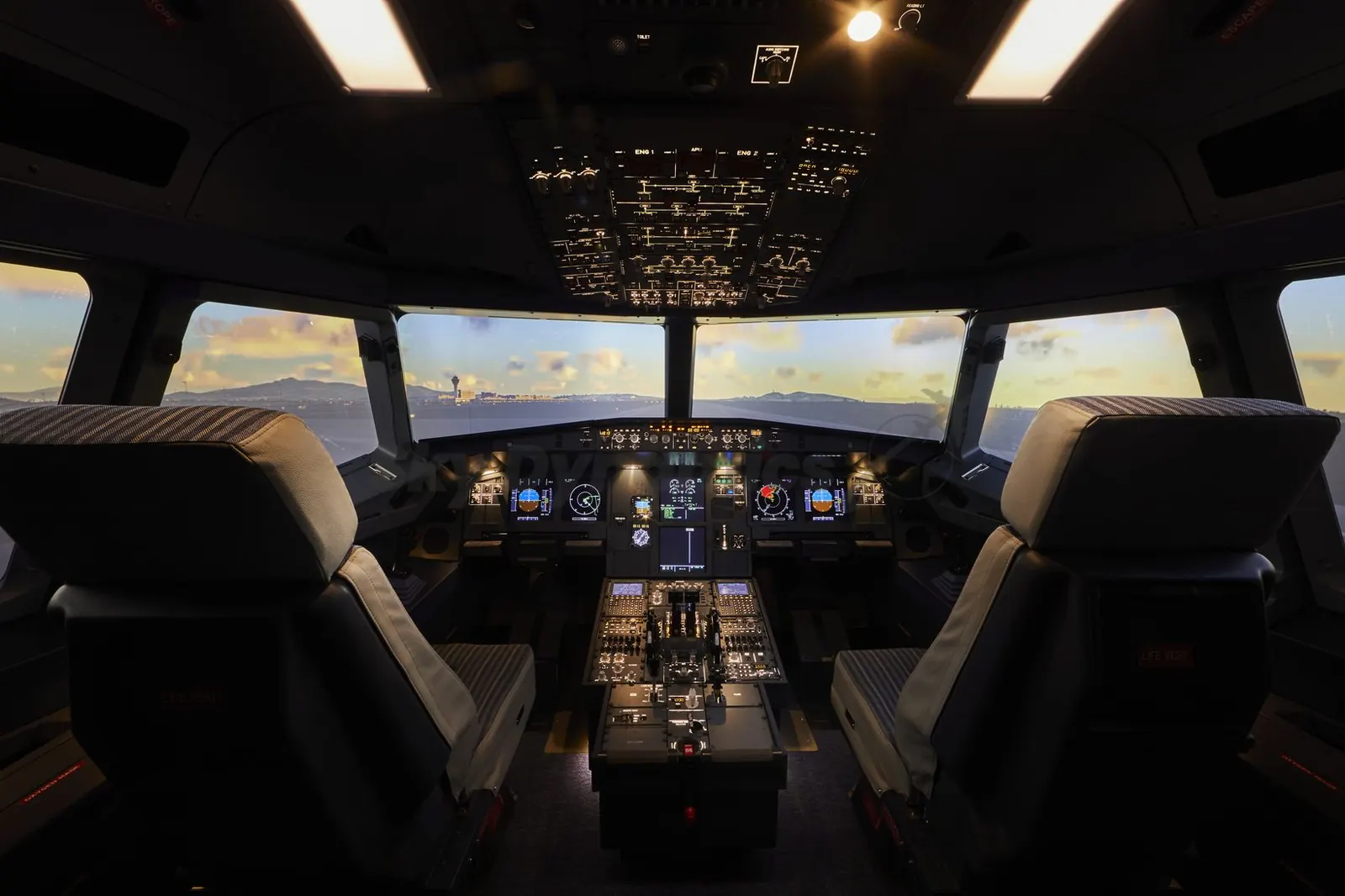

FSTD manufacturer, Heraklion, Crete
FNPT II flight simulators. Professional FSTD devices for SEP IR, MEP IR, MCC and APS MCC, prepared for your authority's evaluation.
SkyDynamics builds the A320 FNPT II MCC simulator for MCC and APS MCC courses, and B737, Q400 and SEP and MEP devices (FNPT 2 and FTD), to a very high quality, with a validated flight model, QTG evidence from our own tool, EBT and CBTA at the instructor station, and FCS++ for Regulation (EU) 2026/781.
The range
Four device families. From the A320 jet MCC trainer to one FNPT II for SEP IR and MEP IR.
FNPT II (FNPT 2) and FTD flight simulation training devices for the aircraft your syllabus uses. Every device can be bought or leased.
- See the A320 FNPT II MCC
Airbus A320 MCC simulator
- FNPT II
- FTD 1
- FTD 2
An FNPT II in jet MCC configuration, fixed base or with motion, for multi-crew cooperation courses, procedures training and line-oriented training.
- EBT and CBTA scenarios from the EBT Scenario Builder
- Grading recorded in aeroEBT at the instructor station
- Lease from a 39% deposit
- Lease from a 39% deposit
Bombardier Q400 turboprop
- FNPT II
- IPT
A turboprop FNPT II, and an Integrated Procedures Trainer (IPT) for procedures, flows and systems training. An IPT is a procedures trainer, not a qualification level of its own.
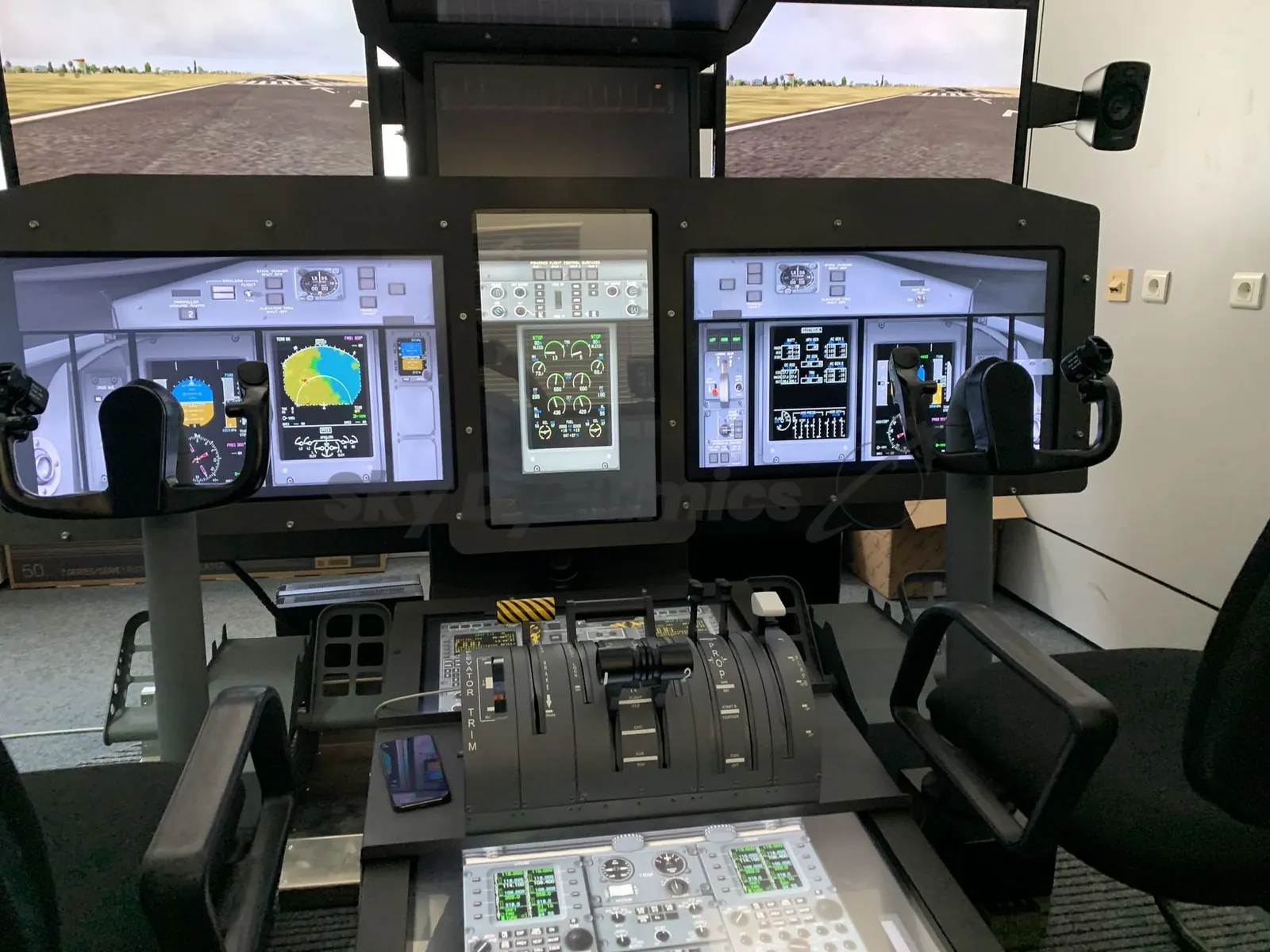
- Touchscreen panels with physical yokes and power levers on the IPT
- Lease from a 39% deposit
- Lease from a 39% deposit
Boeing 737 MCC simulator
- FNPT II
- FTD 1
- FTD 2
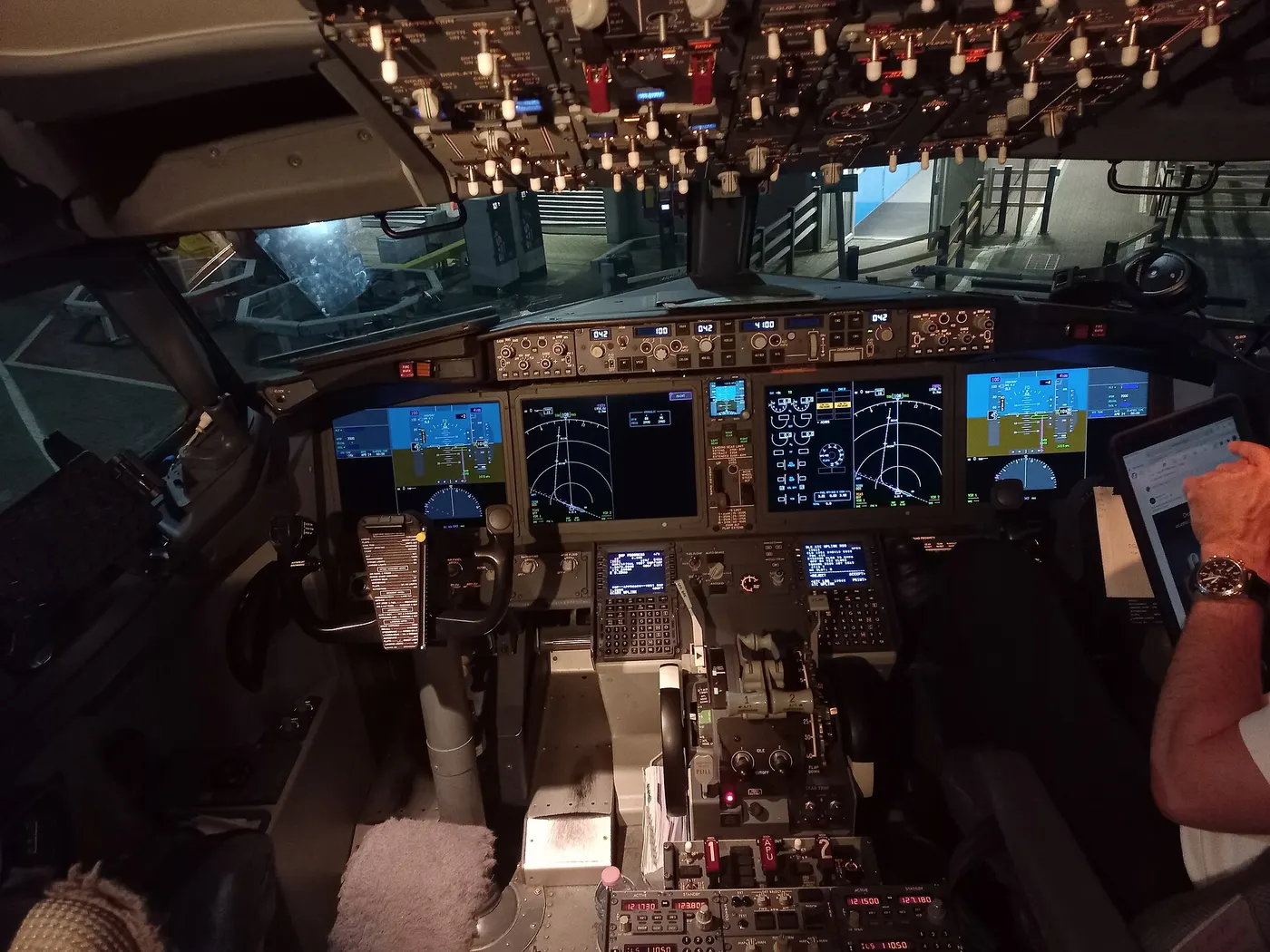
Available as FNPT II, FTD 1 and FTD 2, for procedures training, MCC and line-oriented training.
- Jet MCC configuration as an FNPT II
- Lease from a 39% deposit
- Lease from a 39% deposit
SEP and MEP FNPT II
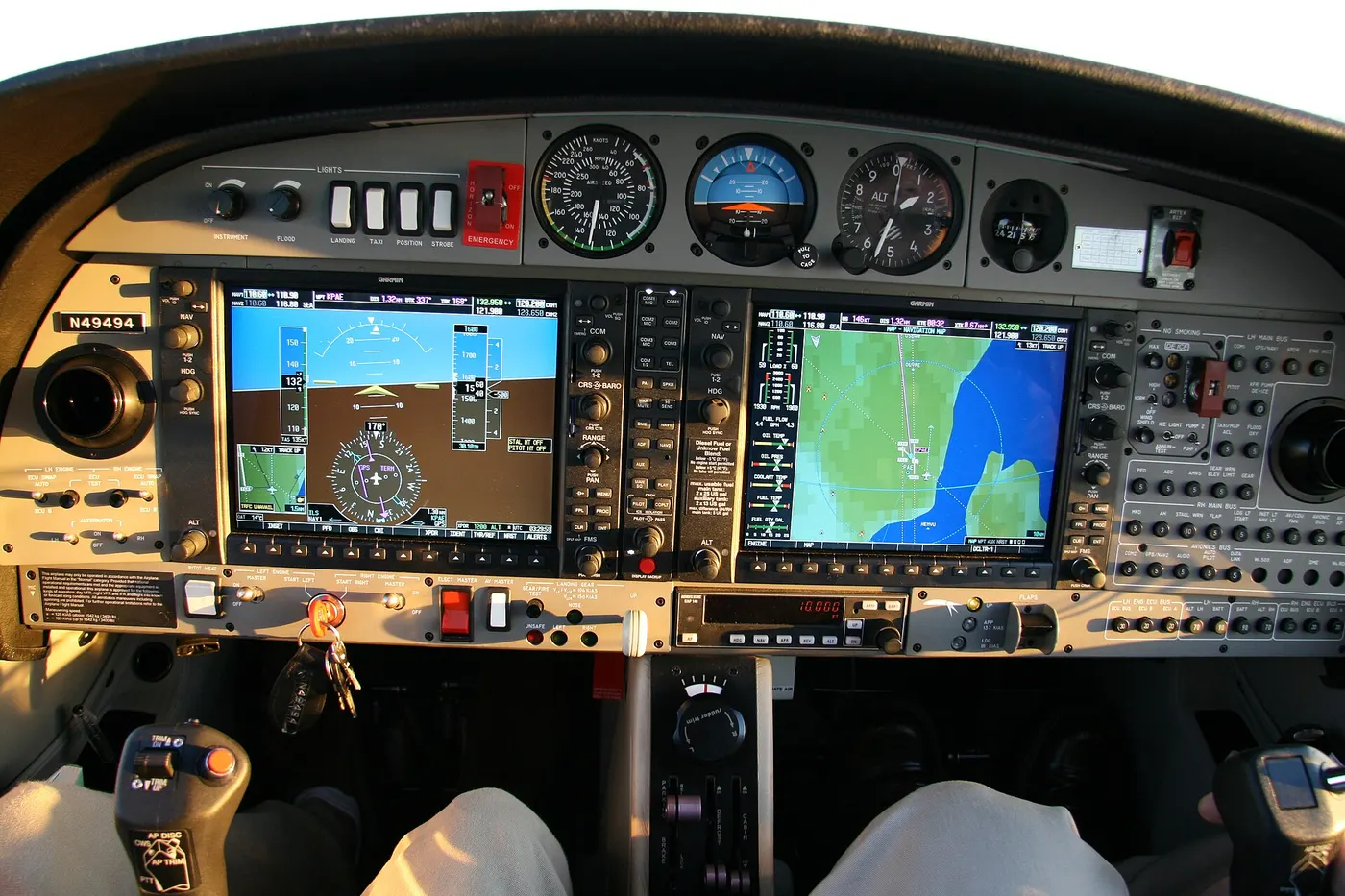
One generic FNPT II for SEP IR, MEP IR and MCC training, configured as the aircraft your syllabus uses: Cessna 172 (C172), Piper Seneca, King Air 350 (B350), or Diamond DA20, DA40 and DA42.
- SEP IR and MEP IR training modules
- MCC training on the King Air B350 configuration
- Analog and glass cockpit options, with interchangeable panels
- Lease from a 39% deposit

SEP IR simulators
SEP IR. One FNPT II, configured as your single-engine aircraft.
An FNPT II (FNPT 2) for single-engine piston instrument rating training, configured as the aircraft your syllabus uses: Cessna 172 (C172), Diamond DA20 or DA40.
- SEP IR training modules
- Analog and glass cockpit options, with interchangeable panels
- A validated flight model and QTG evidence from our own tool
- Lease from a 39% deposit
MEP IR simulators
MEP IR. The same device, as your multi-engine aircraft.
An FNPT II (FNPT 2) for multi-engine piston instrument rating training, configured as a Piper Seneca, a Diamond DA42 or a King Air 350 (B350), on which MCC training is also run.
- MEP IR training modules
- MCC training on the King Air B350 configuration
- Analog and glass cockpit options, with interchangeable panels
- Lease from a 39% deposit
Turboprop simulators
Turboprop. The Q400, as an FNPT II and as a procedures trainer.
The Bombardier Q400 is built as a turboprop FNPT II and as an Integrated Procedures Trainer (IPT) for procedures, flows and systems training. An IPT is a procedures trainer, not a qualification level of its own.
- Touchscreen panels with physical yokes and power levers on the IPT
- MCC training on the King Air B350 configuration of the FNPT II
- Lease from a 39% deposit
A320 FNPT II MCC and APS MCC simulator
A320 FNPT II MCC. A high-quality jet simulator for MCC and APS MCC courses.
The Airbus A320 FNPT II MCC simulator is built to a very high quality, in jet MCC configuration, fixed base or with motion, for multi-crew cooperation (MCC) and APS MCC courses, procedures training and line-oriented training. The Boeing 737 (B737) is built the same way, and both are also available as FTD 1 and FTD 2.
- EBT and CBTA scenarios from the EBT Scenario Builder
- Grading recorded in aeroEBT at the instructor station
- Lease from a 39% deposit
Photographs
The A320 FNPT II. From the enclosure to the overhead panel.
Our own photographs of the Airbus A320 device. Select one to see it full screen.
Photographs
The Q400 procedures trainer. Touchscreen panels with physical yokes, power levers and pedals.
The Bombardier Q400 Integrated Procedures Trainer (IPT). Select a photograph to see it full screen.
Photographs
Flight decks and cockpits. The aircraft we fly, and military cockpits.
The Airbus flight deck in flight, the reference for our simulators, and military cockpits. Select one to see it full screen.
Simulator, EBT and FCS in one system
One chain of evidence. From the syllabus exercise to the EBT scenario, to the FSTD that can credit it, to the proof.
A SkyDynamics FNPT II or FTD simulator arrives connected. Ready-made EBT scenarios, the FSTD Capability Signature with task-to-tool checking in FCS++, and the training record run in one software layer, so every syllabus exercise can be traced from the course to a device that was qualified to credit it.
The syllabus exercise
Every session starts from an exercise in the course syllabus.
- Exercise
- MCC line flight
- Syllabus
- Multi-crew cooperation (MCC) syllabus
The EBT scenario
It is flown inside a ready-made EBT and CBTA scenario from the Scenario Builder library, written around that syllabus exercise and the competencies it should draw out.
- Scenario
- Line flight with a technical malfunction en route
- Competencies observed
- Communication · Leadership and teamwork · Problem solving and decision making · Workload management
The validated device
The flight model is validated against the data, and the QTG tests are run and checked with our in-house QTG tools.
- Device
- FNPT II MCC, jet flight deck (illustrative)
- Evidence
- QTG results and validation data, kept in FCS++
The Capability Signature
Under Regulation (EU) 2026/781 the FSTD is described feature by feature: 14 features, each at a stated fidelity.
S specific, R representative, G generic, N none.
Task to tool
This is where the two sides meet. FCS++ compares what the exercise needs with what the device has, feature by feature, before the session is scheduled.
- Flight deck: the exercise needs representative, the device has representative.
- Control forces: the exercise needs generic, the device has generic.
- Control systems: the exercise needs generic, the device has representative.
- Aircraft systems: the exercise needs representative, the device has representative.
- Ground handling: the exercise needs generic, the device has generic.
- In ground effect: the exercise needs generic, the device has generic.
- Out of ground effect: the exercise needs representative, the device has representative.
- Sound: the exercise needs generic, the device has generic.
- Vibration: the exercise needs none, the device has none.
- Motion: the exercise needs none, the device has none.
- Visual: the exercise needs generic, the device has representative.
- Navigation: the exercise needs representative, the device has representative.
- Atmosphere & weather: the exercise needs representative, the device has representative.
- Operating sites & terrain: the exercise needs representative, the device has representative.
Every feature meets or exceeds what the exercise needs.
The scenario can be scheduled on this device, with the evidence behind each fidelity level already on file.
The session
The scenario loads at the instructor station. The instructor runs the events and grades the observable behaviours, competency by competency, on the 1 to 5 scale.
- On this device
- Scheduled, flown and graded
- Recorded as
- aeroEBT session linked to the device it was flown on
The proof
Two records, kept as one file. When your authority asks whether this exercise was trained on a device that could credit it, the answer is already together, shared read-only when you choose.
Training record
- Trainee, instructor and date
- Scenario and its version
- Syllabus exercises flown, event by event
- Grade and observable behaviours, competency by competency
Device record
- Qualification certificate
- QTG results against the validation data
- Capability Signature in force on the day
- Qualification events and technical log
Illustrative values, not a regulatory determination for any real device or task. Order of fidelity: specific, then representative, then generic, then none.
What is in the delivery
What you receive. The device, its software, its documents and the people who support it.
A training device is a capital asset that has to pass an authority evaluation, hold a schedule and keep working for a decade. These are the parts of that which are ours to get right.
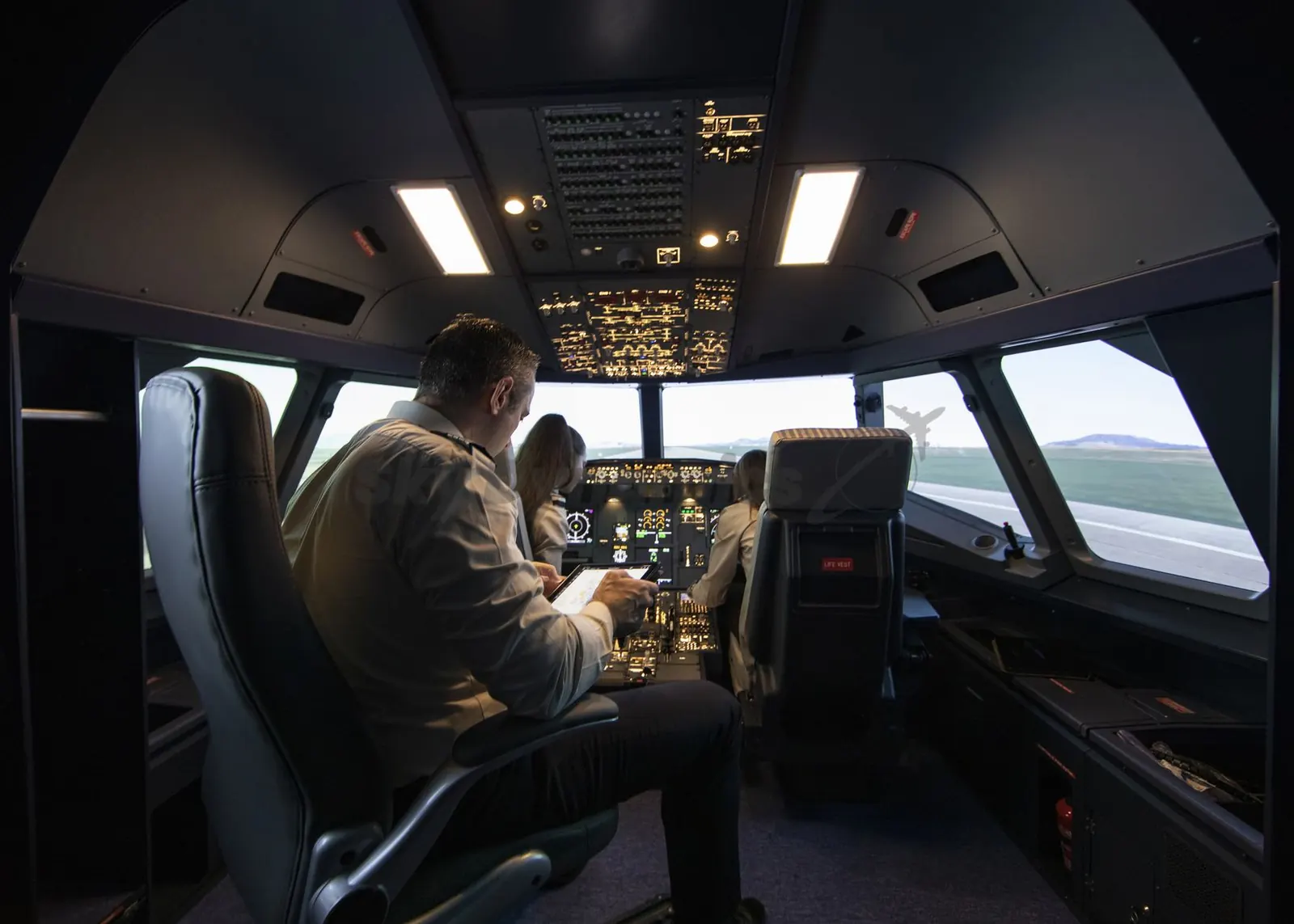
The device
Flight deck hardware
Built with new OEM and real aircraft components.
Visual system
Projection and display systems specified with established partners for the field of view your training requires.
Instructor station
Designed by instructors: session setup, failure injection and repositioning without leaving the training flow.
Validated flight model
The flight model is validated against the data, so the device behaves like the aircraft it represents.
With the device
Software configured for you
Adapted to your SOPs, aircraft configuration and training syllabus, with regular terrain, navigation and aircraft data updates. Logging software for simulator hours and maintenance checks is included.
EBT and CBTA at the instructor station
aeroEBT and the EBT Scenario Builder run the scenario and record the competency grading. No separate system is needed.
Documentation
QTG, validation, operations and maintenance manuals, delivered with every device and kept in FCS++.
Installation, training and support
On-site installation, operator and instructor training, and technical support through your first qualification and beyond.
For your configuration
On request. The specification, the room and the delivery plan.
Specification sheet, room and power requirements and a delivery plan for your configuration, on request. Tell us the aircraft type, the training you run and when you need the device.
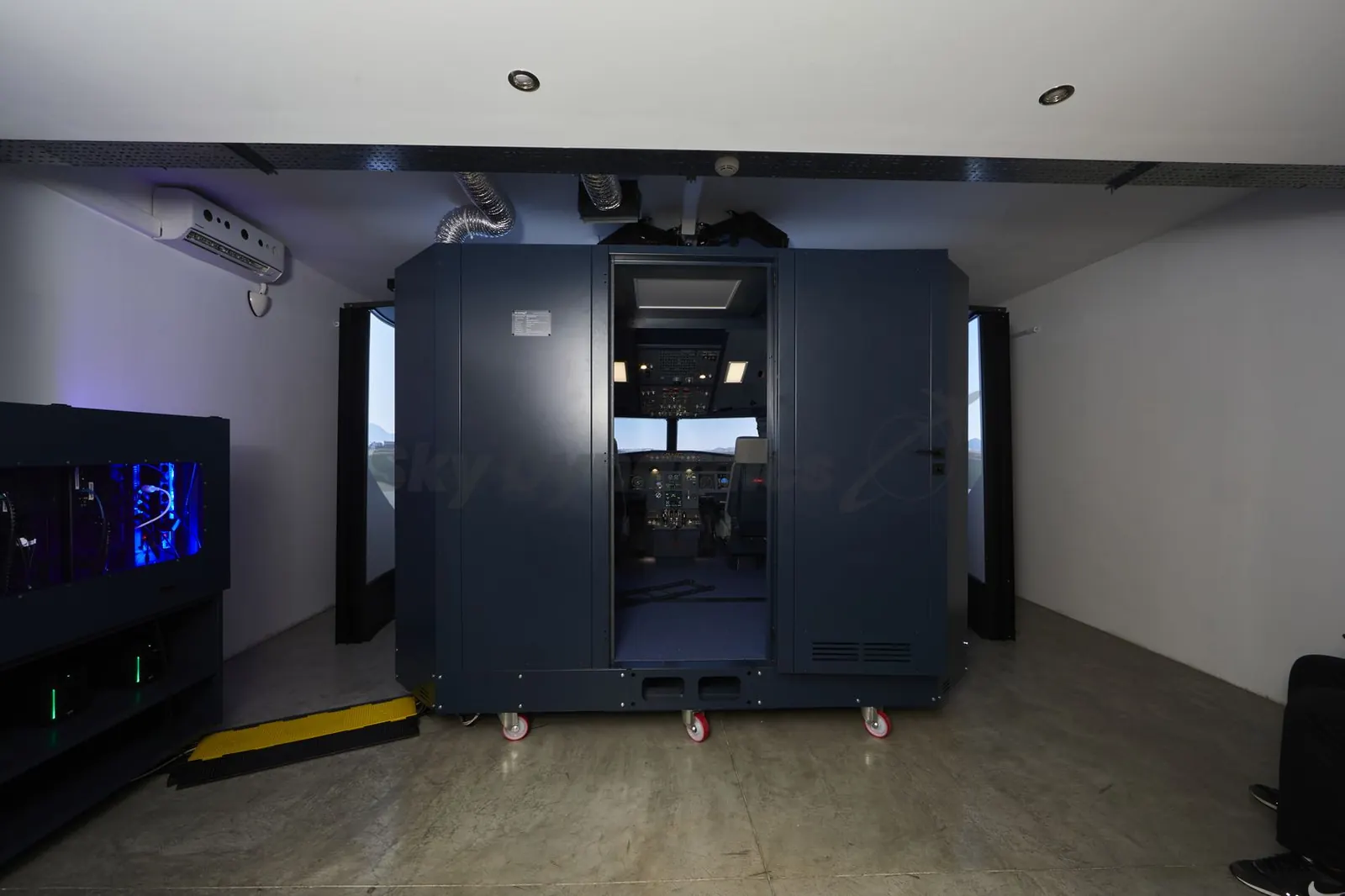
EASA FNPT II qualification
Evidence your authority expects. From the first evaluation to each recurrent one.
What is often called simulator certification is, in the rules, qualification: your competent authority evaluates the FNPT II (FNPT 2) and issues its qualification certificate. Our in-house QTG tools and our team prepare the evidence it asks for.
In-house QTG tool
Our own QTG tool runs the automated QTG tests and builds the report for each device, so QTG validation is not waiting on a third party.
QTG analyser
Checks every QTG result against its validation data and tolerances, test by test, so an issue is found and fixed before the evaluation, not during it.
Evidence aligned with EASA CS-FSTD
The device and its evidence package are aligned with EASA CS-FSTD, with the flight model validated against the data.
Regulatory training for your staff
Training on regulatory requirements, audit readiness and continued qualification.
FCS++ · Regulation (EU) 2026/781
Kept in FCS++. The qualification, the QTG results and the Capability Signature of each device.
FCS++ is our platform for FSTD qualification records under EASA CS-FSTD and Regulation (EU) 2026/781, for SkyDynamics devices and other manufacturers' FSTDs alike. It keeps each device's qualification, documents, QTG evidence and Capability Signature in one place, built for operators, manufacturers and authorities. It is AI-assisted: it points out gaps and missing evidence, and it never overrides or steers the qualification decision.
- Operators: an FSTD register with certificate, ESL, QTG and evaluation reports, plus which lessons each device can credit
- Manufacturers: the Capability Signature documented feature by feature, with the evidence behind every fidelity level
- Authorities: evidence shared read-only, when the operator chooses to share it
- Ready for the Capability Signature transition, and for legacy FNPT II devices that keep their type and level
SkyDynamics Financial Services
Lease or buy. Three deposit schemes: 39%, 50% or 70%.
Buy the device outright, or lease it from SkyDynamics Financial Services. Every lease has the same shape: a deposit of 39%, 50% or 70% of the agreed price, then the balance month by month. Remote FSTD maintenance is included in every scheme.
- 39% deposit, then 61% month by month
- 50% deposit, then 50% month by month
- 70% deposit, then 30% month by month
- Remote FSTD maintenance in every scheme, by the engineers of the manufacturer
- The price, the number of months and the monthly amount are set out in your written proposal

FNPT II and MCC simulators: questions buyers ask
Who manufactures FNPT II flight simulators in Europe?
SkyDynamics is a European manufacturer of FNPT II (FNPT 2) and FTD flight simulation training devices (FSTD), based in Heraklion, Crete, Greece. It designs and builds the device, validates the flight model, produces the QTG evidence with its own QTG tool and supports the operator through qualification with its authority. The range covers the Airbus A320, the Boeing 737, the Bombardier Q400 and one SEP / MEP / IR / MCC device configured as a Cessna 172, Piper Seneca, King Air B350 or Diamond DA20, DA40 and DA42.
How do we choose the best FNPT II simulator manufacturer?
Judge each manufacturer on evidence you can check. Five things mark a high-quality FNPT II (FNPT 2) simulator: the manufacturer designs and builds the device itself, the flight model is validated against data, the QTG evidence comes from the manufacturer's own QTG tool, devices already delivered have been qualified by their competent authority, and the device can be monitored and supported remotely after delivery. SkyDynamics builds its simulators to a very high quality on these five points. It has delivered Airbus A320 FNPT II simulators that the competent authority qualified, and a visit to a device in service can be arranged on request.
Is the A320 FNPT II used for MCC and APS MCC courses?
Yes. The SkyDynamics A320 FNPT II MCC simulator is built in jet MCC configuration for multi-crew cooperation (MCC) and APS MCC courses. The approval of your course stays with your authority; we supply the device and the qualification evidence it asks for.
Do you build an A320 FNPT II MCC simulator?
Yes. The Airbus A320 simulator is built as an FNPT II in a jet MCC configuration, fixed base or with motion, and is also available as FTD 1 and FTD 2. It is used for multi-crew cooperation (MCC) courses, procedures training and line-oriented training, and it runs EBT and CBTA scenarios from the EBT Scenario Builder, with the grading recorded in aeroEBT at the instructor station.
Which simulators do you offer for MCC training?
Jet MCC on the Airbus A320 and the Boeing 737 FNPT II, and turboprop MCC on the King Air B350 configuration of the SEP / MEP / IR / MCC FNPT II. The Bombardier Q400 is available as an FNPT II and as an Integrated Procedures Trainer (IPT).
Do you build a Boeing 737 simulator?
Yes. The Boeing 737 (B737) simulator is available as FNPT II, FTD 1 and FTD 2, for procedures training, MCC and line-oriented training.
Which FNPT II do you offer for SEP, MEP and IR training?
One generic FNPT II covers Single Engine Piston (SEP), Multi-Engine Piston (MEP) and Instrument Rating (IR) training, with SEP IR and MEP IR modules. It is configured as the aircraft your syllabus uses (Cessna 172, Piper Seneca, King Air B350, or Diamond DA20, DA40 and DA42), with an analog or glass cockpit and interchangeable panels, so a flight school trains several ratings on one device.
How is a SkyDynamics FNPT II qualified?
By the competent authority, which evaluates the device and issues its qualification. SkyDynamics prepares the device for that evaluation: the device and its evidence package are aligned with EASA CS-FSTD, the flight model is validated against the data, the in-house QTG tool runs the automated QTG tests and builds the report, and the QTG analyser checks every result against its tolerances before the evaluation. FCS++ then keeps the qualification, the QTG results and the FSTD Capability Signature introduced by Regulation (EU) 2026/781.
Which simulators has SkyDynamics delivered?
Three deliveries are described in the news section. Flyence Aviation: an Airbus A320 FNPT II delivered in November 2022, which the competent authority qualified in 2023. Superior Air in Megara: an Airbus A320 FNPT II delivered in September 2025, built with real aircraft (OEM) components, upgradable to FTD 1 and FCS ready. Airplan ATO: an Airbus A320 FNPT II delivered in November 2025 and qualified by the competent authority in the FNPT II category, the fourth A320 simulator delivered in Greece by SkyDynamics. A visit to a device in service can be arranged on request.
Does the simulator support EBT and CBTA training?
Yes, natively. aeroEBT and the EBT Scenario Builder run the scenario and record the competency grading at the instructor station, so evidence-based training (EBT) and competency-based training and assessment (CBTA) need no separate system.
Can we lease an FNPT II instead of buying it?
Yes. Any FNPT II or FTD device in the range can be leased through SkyDynamics Financial Services. There are three schemes: a 39%, 50% or 70% deposit, with the balance paid month by month. Remote FSTD maintenance is included in every scheme.
Can we see the specification before we order?
Yes. The specification sheet, the room and power requirements and a delivery plan are prepared for your configuration and sent on request.
Talk to the simulator team.
Tell us your programme, the aircraft type and when your authority evaluation is planned.
We respond within one business day.