

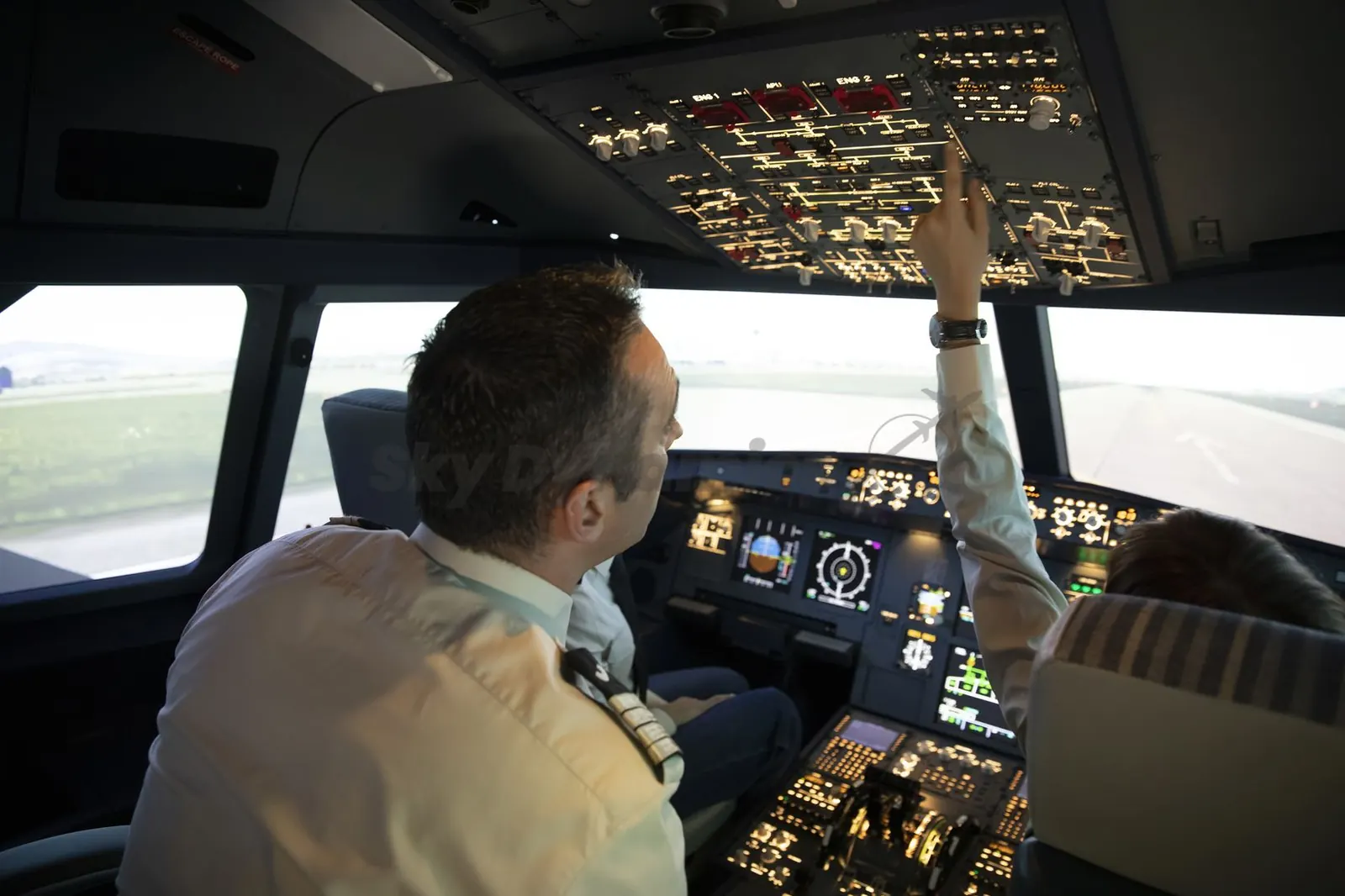
ATO to the line
One pilot record. From the first lesson to the line.
Flight school, MPL or type-rating course, recurrent training: three stages, usually three systems. SkyDynamics builds the devices up to MCC and the software for every stage, with one logbook that stays with the pilot.

The problem
Where the pipeline breaks. At the handover, at the device and at the standard.
At the handover
An airline receives a logbook and a certificate, not the competency picture the ATO built over eighteen months.
At the device
Training is planned around the device that is free rather than the device that can credit the lesson.
At the standard
The ATO, the type-rating organisation and the airline each grade to their own interpretation of the same competencies.
The pipeline
Four stages. One logbook, and a record that builds along the way.
One record
The logbook follows the pilot. The training record stays with the organisation that keeps it.
Logbook hours stay attached to the pilot as they move from the flight school to the right-hand seat. Each organisation keeps its own training record and shares it with the next one only by explicit arrangement. From type rating onward, competency assessments, scenarios, devices and instructor observations build up in aeroEBT, so a training department planning a cycle can see where each pilot has actually been. Carrying ab initio competency grades into that history is on the roadmap.
- One pilot account across ATO, MPL, type rating and recurrent
- Portable logbook from the first lesson; competency history from type rating onward
- Device capability recorded with each session, through FCS++
- Exportable at any time: the logbook belongs to the pilot, the training record to the organisation that keeps it
The pilot logbook
The logbook stays with the pilot. High assurance, and free for the whole career.
Every pilot trained on the platform gets the aeroEBT pilot logbook: hours and training that come from the recorded flights and sessions themselves, kept by the pilot when they leave the school and when they change airline, at no cost to them.
High assurance
Entries come from the recorded flights and sessions, with the instructor behind them, rather than being typed in afterwards.
CV generated automatically
Hours by type and role, ratings and courses assembled into a current CV whenever the pilot needs one.
Progress reports
Where the pilot stands in a course or a recurrent cycle, produced from the same record.
Free for the pilot
The logbook stays with the pilot for the rest of their career: a gift from the school to its students, and from the airline to its pilots.
Who this is for
Both ends of the pipeline. And the partnership between them.
Airlines running cadet programmes
Follow progress at your partner ATO through the sponsor portal while the cadets are still there, not at the handover. Your pilots keep a high-assurance aeroEBT logbook, free, for the rest of their career.
ATOs supplying airlines
Show airline partners evidence rather than assurances, in the format their training department already uses. The aeroEBT pilot logbook stays with each student, free, for the rest of their career: a gift from your school to your students.
Flight schools growing into ATOs
One system for operations and training records as approvals expand.
Training organisations with mixed fleets
Devices, scenarios and syllabi managed together, with each session run on a device that can credit it.
What sits behind it
One supplier. Devices up to MCC, software for every stage.
SkyDynamics builds FNPT II devices up to MCC and the training software that runs on them. There is no full flight simulator in the range: the type rating is flown on a device elsewhere, and the software, which works with any FSTD, records it in the same pilot account.
Flight simulators
FNPT II devices for SEP IR, MEP IR, turboprop and jet MCC training.
Learn moreaeroEBT
Competency grading, concordance and EBT programmes.
Learn moreMPL programme
Programme design and the cadet-to-first-officer pathway.
Learn moreTMS
Qualifications, courses and expiries across fleets and bases.
Learn moreFSMS
Flight school management with CBTA competency marks: students, aircraft, instructors, billing.
Learn moreFCS++
Which device can credit which lesson, under Reg. (EU) 2026/781.
Learn more
Questions airlines and ATOs ask
Do the airline and the ATO have to use the same system?
It is easier when they do, but not required. What matters is that competency data can be exported and imported in a structured form rather than as a PDF.
Who owns the cadet data?
The logbook belongs to the pilot. The training record belongs to the organisation that keeps it, subject to the GDPR and the agreement between the ATO and the airline. Nothing is shared between organisations without an explicit arrangement. Training records are held in data centres in Switzerland.
Can we start at one stage only?
Yes. Most operators start with recurrent EBT or with ATO operations, then extend. The pipeline is a direction, not a prerequisite.
Does this need SkyDynamics simulators?
No. The software works with any FSTD. Using our devices means the capability evidence arrives with the device.
What about Area 100 KSA?
Knowledge, skills and attitudes assessment in the ATO phase is part of programme design. Recording it in the same competency structure as later stages is on the roadmap; today ATO lessons carry competency marks.
Close the gap between the flight school and the flight deck.
Tell us where your pipeline breaks today (the handover, the devices or the standard) and we will show you what joining it up looks like.
We respond within one business day.