Research
Research behind the products. Human factors, training science and AI assurance, from Heraklion, Crete.
SkyDynamics grew out of flight-simulation research, and research still shapes what we build. This page lists the questions we study. Where something is a direction and not part of a product, it says so.
On the flight deck. Eye tracking and real-time image recognition, in our own A320 simulator.
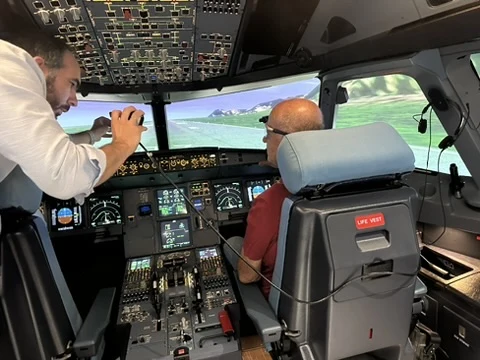
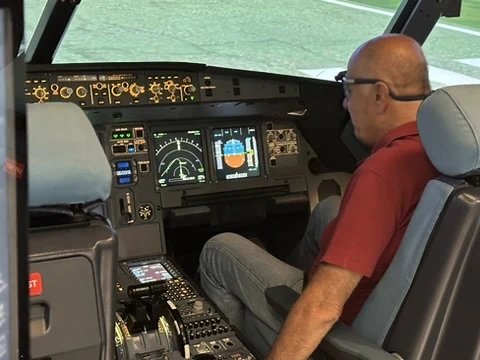
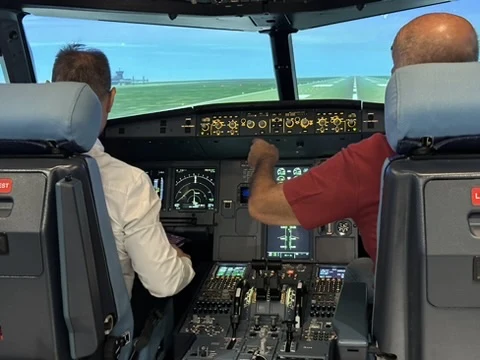
We are studying where the attention of a pilot goes during a flight. The participant wears eye-tracking glasses in the simulator, and software recognises in real time what is in view: the instruments, the displays and the view outside. The work is part of our research project to enhance safety in aviation.
This is research in progress. No result is claimed here, and it is not a feature of a SkyDynamics product. Our thanks go to Dr Ioannis Aslanides for the contribution to the project. Read the research note.
Human factors digital twins. A digital description of attention and workload, phase by phase.
A digital twin usually describes a machine. This one describes the person at the controls: where attention goes and how workload builds, built from what a simulator session records.
SkyDynamics works on it as a company at the Science and Technology Park of Crete, together with researchers at FORTH. It is research in progress: no result is claimed, and it is not part of a product.
The session
A flight in the A320 simulator. The participant wears eye-tracking glasses.
What is recorded
- GazeWhere the eyes are directed (eye tracking)
- What is in viewInstruments, displays and the view outside (real-time image recognition)
- Body signalsHeart rate variability and EEG, being explored
- The sessionIts phases and events
The twin
Take-offCruiseLanding
- Attention on the flight path
- Workload
A description of attention and workload, phase by phase.
The questions
- Where does a pilot look, and when?
- When does workload build?
- What should the next scenario train?
Research in progress. The gaze path and the two lines are drawn for illustration: they are not measured results, and nothing here is part of a SkyDynamics product.
Human factors. How crews and instructors work with automation and AI.
We study how pilots, instructors, dispatchers and maintenance engineers work with automated and AI-assisted systems, so that technology supports situational awareness and decision-making and does not erode them.
Workload and attention
We study how workload and attention shift across the phases of a flight, and which conditions lead to attentional tunnelling or overload.
Crew communication
We study how crews communicate, lead and keep a shared picture in non-normal situations. These questions inform how we think about scenario design in aeroEBT.
Working with AI
We study trust, automation surprise and the authority gradient between a person and an AI recommendation. In OpsEye the AI shows its source and a person decides, and in Flying Whale the briefing is marked as informational and the pilot decides.
Training science. Scenario design, grading consistency, skill retention and device fidelity.
We study how Evidence-Based Training (EBT) and Competency-Based Training and Assessment (CBTA) work in practice, for the pilot training departments that run them.
Scenario design
We study how an EBT scenario is built from operational data, mapped to the pilot competencies and their observable behaviours, and checked before it reaches the simulator. This is the question behind the EBT Scenario Builder.
Grading consistency
We study why instructors grade the same performance differently, and how shared context reduces that drift. Instructor concordance in aeroEBT is the product side of this question.
Skill retention
We study how quickly skills fade and what that means for the timing of recurrent training.
Device fidelity
We study which training task needs which level of fidelity in a flight simulation training device (FSTD), from an FNPT II (FNPT 2) to a full flight simulator. This is the question behind the task-to-tool method and FCS++.
AI assurance. Answers that show their source, decisions that stay with a person.
Our AI research follows one rule: in aviation an answer must be traceable, and a person must decide. It stands behind AeroBrain, the SkyDynamics set of high-assurance AI technologies, which is developed to safety-critical rules such as MISRA C and the objectives of DO-178C.
Retrieval with evidence
We study deterministic retrieval over manuals, regulations and records, so that every answer carries its source and revision.
Bounded assistance
We study how an AI system can monitor, propose and explain inside a fixed set of permitted actions, with every proposal and every human decision logged.
Small models on the device
We study small language models that run on the device itself, for real-time, edge and air-gapped use.
Research directions. Questions we are exploring, not features of a product.
The lines below are open questions. None of them is part of a SkyDynamics product today, and no result is claimed here. In aeroEBT the instructor remains the assessor of record: AI proposes, and the instructor confirms every entry.
Physiological measures in the simulator
We are exploring whether measures such as EEG, heart rate variability and eye tracking can describe workload, stress and fatigue during a simulator session. Eye tracking is the first of them in the simulator: the sessions are described at the top of this page.
Workload-aware assistance
We are exploring whether an assistant could time its suggestions to the workload of the crew.
Fatigue and training
We are exploring how fatigue and circadian disruption show in training performance.
At FORTH. Our base in Heraklion, and the researchers we work with.
SkyDynamics is based at the Science and Technology Park of Crete (STEP-C) of the Foundation for Research and Technology - Hellas (FORTH), in Heraklion. Our research sessions take place there, in our own A320 simulator.
A company of the Park
FORTH's announcements of September 2026 name SkyDynamics among the companies of the Park, in aerospace technology and artificial intelligence: at the visit of the European Commission's DG REGIO delegation and at the visit of the Ambassador of China.
Working with researchers at FORTH
We carry out our human factors research as a company, together with researchers at FORTH. Dr Charikleia Chatzaki, our Head of Research, is a former member of the Computational BioMedicine Laboratory of FORTH's Institute of Computer Science.
What FORTH is
FORTH is a research centre in Greece, with its headquarters in Heraklion. forth.gr and the Science and Technology Park of Crete describe their own work. FORTH is not responsible for SkyDynamics products or statements.
Who leads the research. A head of research, and an airline captain who studies human factors.
Our questions are led by people who do research for a living and by people who fly, instruct and examine. The whole team is on the About page.
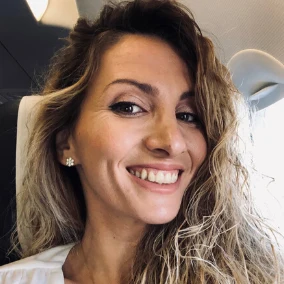
Dr Charikleia Chatzaki
Head of Research, Biomedical Informatics & Affective Computing
Head of Research at SkyDynamics and a researcher in biomedical informatics and affective computing. Her doctoral research at the Hellenic Mediterranean University developed a multimodal approach for assessing mental stress from physiological signals, and her work spans computational neuroscience, biomedical signal and image processing, mental health, and smart eHealth and mHealth services.
Full profile of Dr Charikleia Chatzaki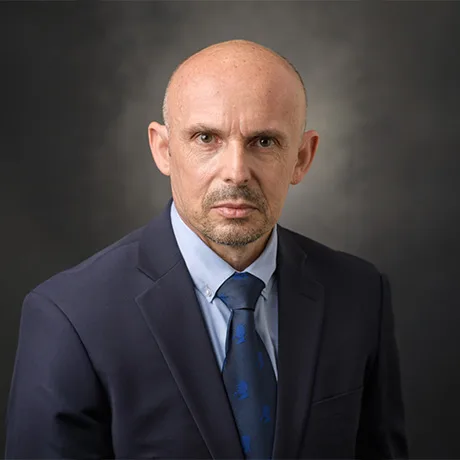
Dr Dimitrios Ziakkas
Expert, EBT/CBTA, FCS & AI Technologies Department
Works on aviation safety, human factors, artificial intelligence in aviation, competency-based training and assessment (CBTA), evidence-based training (EBT) and future operational concepts such as single-pilot operations (SiPO). His research explores how immersive simulation and digital systems are transforming aviation training, safety management and operational decision-making. Alongside his academic career he remains active in operations as an Airbus captain, instructor and examiner.
Full profile of Dr Dimitrios Ziakkas
Who we work with. A university origin, and questions tested with training organisations.
Our questions come from operations, and we test the answers with the people who train and assess.
Where we come from
SkyDynamics grew out of flight-simulation research at the Hellenic Mediterranean University.
Tested in practice
The CBTA method for assistant mechanics was tested with Olympic Air Maintenance Training Organization on its own programme. See the programme.
Your organisation
We welcome proposals from universities, airlines, training organisations and authorities in human factors, training science and AI assurance. Propose a collaboration.
Propose a collaboration. Tell us the question and who would work on it.
We reply within one business day.